Video Walls in Transit Hubs: Real-Time Info Across Light Rail, Bus, and Ferry Terminals
3 minute read | Updated July 27, 2026
Few environments demand real-time communication as urgently as a transit hub. Riders moving between light rail, bus, and ferry connections need accurate information the moment they need it — not the schedule that was printed last month, and not a delay they only learn about after they've already missed their connection. Video walls and digital signage have become foundational infrastructure for modern transit authorities, giving riders the confidence to plan their journey and giving operators a way to communicate clearly across an entire multimodal network.
This guide explores how real-time video walls and signage are transforming transit hubs, what makes multimodal communication genuinely effective, and how a purpose-built platform can bring light rail, bus, and ferry data together in one place.
Why Real-Time Information Changes the Rider Experience
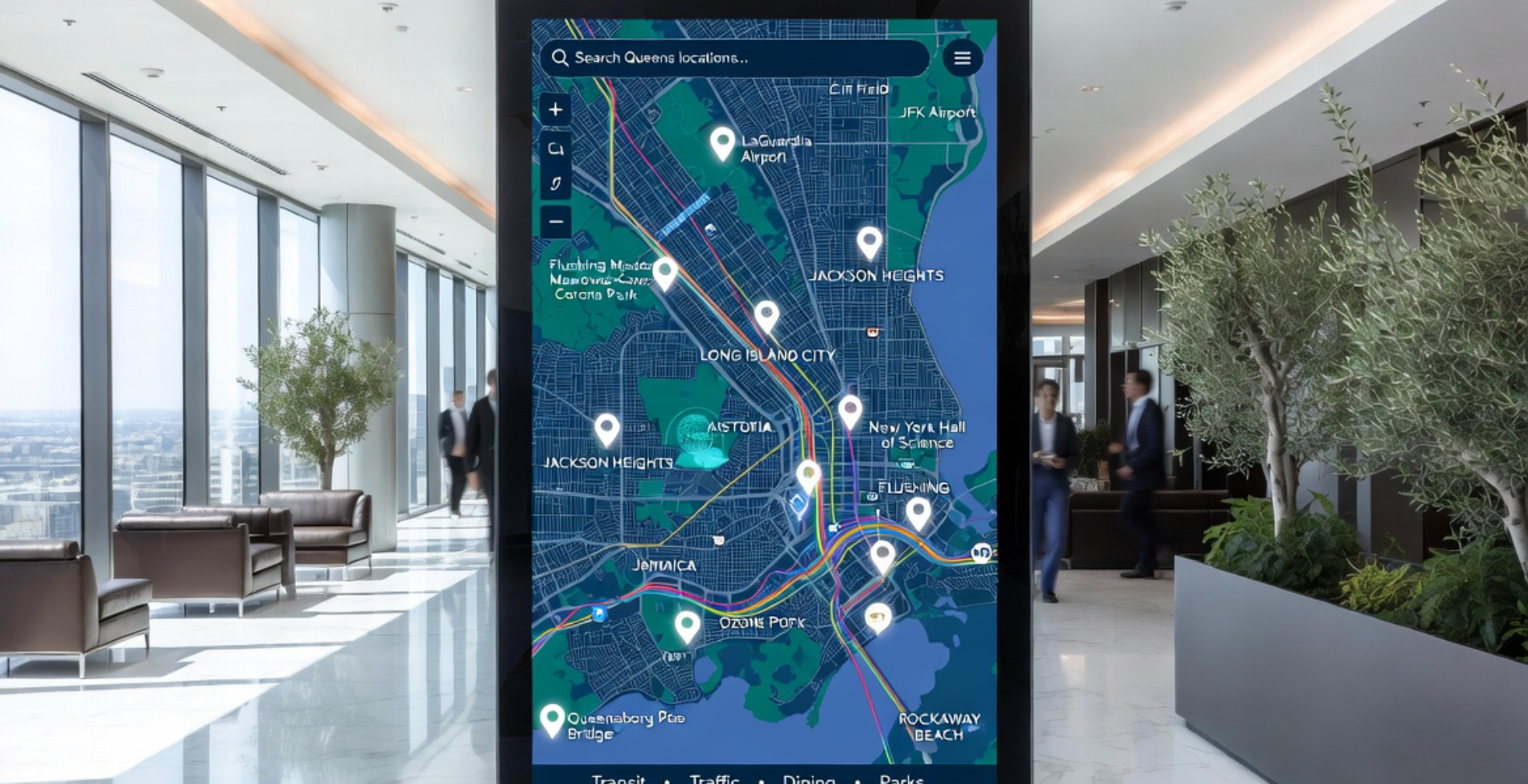
The single biggest source of transit anxiety isn't the wait — it's the uncertainty. Real-time passenger information reduces uncertainty by providing accurate arrival times, service updates, and route changes, helping riders make informed decisions and improving their confidence in the transit system as a whole.
That confidence compounds across a multimodal journey, where riders are often making split-second decisions about which connection to catch. Multi-terminal transportation hubs can overwhelm travelers, and digital wayfinding directly reduces passenger confusion across airports, train stations, and major bus terminals. When information is accurate and immediately visible, riders spend less time hesitating at a decision point and more time moving confidently through their journey.
Real-time information also matters most in the moments things go wrong. Weather delays, security incidents, and gate or platform changes require instant facility-wide alerts, since PA systems alone often miss passengers who are on the move, wearing headphones, or simply too far from a speaker to hear an announcement clearly. A well-placed video wall or display network fills exactly that gap.
Video Walls as the Central Information Hub
In the busiest transit environments, a single display often isn't enough to communicate everything a hub needs to convey at once — arrivals, wayfinding, alerts, and general information all competing for the same visual space. This is precisely where a video wall's multi-zone capability becomes valuable.
In very busy stations, video walls act as the main information hub. Using custom screen layouts, a wall can be split into multi-zone content — showing live arrival times in one zone, a dynamic map in another, and urgent alerts at the bottom — giving riders a single glance at everything relevant to their journey, without needing to search across multiple separate signs.
This capability scales differently depending on the size and traffic of the hub. City centers need big, clear signage — video walls showing live data for multiple transit types, keeping high-traffic areas moving smoothly and reducing the burden on customer service staff. Smaller stops and rural routes benefit just as meaningfully, if in a different form: on low-frequency routes, missing a bus can mean a long wait, and digital signage gives riders in these areas accurate arrival times they can trust, reducing the anxiety of infrequent service.
Bringing Light Rail, Bus, and Ferry Together
The defining challenge — and opportunity — of a modern multimodal transit hub is unifying information across very different transportation modes into one coherent rider experience.
Consistency across every touchpoint. Riders shouldn't get different information depending on whether they check a station display, a mobile app, or an operator's dispatch system. When signage is connected to a centralized data source, rider apps, operational systems, and displays all reflect the same real-time information, ensuring consistency across the entire network.
Support across every display format a hub actually uses. A single transit hub typically needs several different kinds of displays working together. Transit environments require a range of display technologies to communicate effectively with riders, including signage in high-traffic Ground Transportation Centers where multiple services connect, as well as curbside pickup zones, terminal displays, and stop-level arrival signs.
Outdoor-ready hardware for platforms and terminals exposed to the elements. Ferry docks, open-air platforms, and bus shelters all demand display technology built for the conditions. Weatherproof outdoor LED displays provide live arrival and departure times, service updates, and local information, remaining legible in direct sunlight and variable weather — a requirement that matters just as much for a Pacific Northwest ferry terminal as it does for a sun-exposed bus plaza.
Purpose-Built Transit Integration: Navigo® TransitAccess®
The most effective transit hub signage isn't a general-purpose display retrofitted for transit data — it's a platform built specifically to connect to the live feeds riders actually rely on. That's the purpose of Navigo® TransitAccess®, ITS, Inc.'s dedicated transit signage solution.
Navigo® TransitAccess® is a real-time transit digital signage solution designed for transportation hubs, office buildings, campuses, and mixed-use properties, enabling organizations to instantly share live transit, traffic, and mobility data with commuters and travelers. From bus and rail arrival times to traffic conditions and shared mobility availability, TransitAccess delivers critical commuter information through high-visibility touchscreen and touchless LED displays.
The platform is built around flexibility for the property or agency deploying it. Subscribing to Navigo TransitAccess lets a property's digital signage display real-time schedules and status of public transportation options within a chosen radius — populating available bus stops, trains, light rails, car shares, bike shares, scooter shares, and car charge stations automatically. On a touchscreen, riders can interact directly with the display to view and zoom interactive maps, turning a passive information board into a genuinely useful wayfinding tool.
For properties and transit authorities looking to reduce reliance on personal devices for basic transit information, this integration solves a real problem. Rather than employees or riders relying on personal apps to check train and bus arrivals, live transit information can be displayed in lobbies and common areas — continuously updated, professionally formatted, and integrated into the building's visual identity.
A Growing Priority Across the Country
Transit authorities across the country are treating this kind of investment as a genuine strategic differentiator, not just a convenience upgrade. As competition among hubs intensifies, the traveler experience is becoming a strategic differentiator, and displays are playing a central role — with major transportation hubs deploying next-generation wayfinding solutions that go far beyond simple signage.
ITS, Inc. has seen this firsthand across our transit-focused work in the Pacific Northwest and beyond, from multimodal light rail, bus, and ferry connections around the Puget Sound to Sea-Tac and Portland International's terminal expansions to accessible, inclusive wayfinding design across transit systems nationwide.
Navigo® by ITS, Inc. has helped transit authorities and transportation gateways across the US and Canada deliver exactly this kind of real-time, multimodal communication since 1999.
Explore our digital transit signage solutions, see these deployments across our portfolio, and review the technology fundamentals in our companion guide, What Is a Video Wall?
Ready to bring real-time light rail, bus, and ferry data to your transit hub or property? The Navigo® team can help design a display strategy that keeps riders confidently informed at every connection.
Frequently Asked Questions
Why does real-time information matter more in transit hubs than in most other environments?
Because the biggest driver of rider anxiety is uncertainty, not the wait itself. Real-time passenger information reduces uncertainty by providing accurate arrival times, service updates, and route changes, helping riders make informed decisions and improving their confidence in the transit system as a whole. In a multimodal environment, where riders are often deciding between connections in real time, that confidence has a direct effect on how smoothly the entire journey unfolds.
How do video walls help in especially busy transit hubs?
By consolidating everything a rider needs into one visual surface instead of scattering it across separate signs. In very busy stations, video walls act as the main information hub, using custom multi-zone layouts to show live arrival times in one zone, a dynamic map in another, and urgent alerts at the bottom. This gives riders a single glance at their full journey status rather than requiring them to search multiple locations for the same information.
Can digital signage reach passengers that PA announcements miss?
Yes, and this is one of its most important functions during service disruptions. Weather delays, security incidents, and gate or platform changes require instant facility-wide alerts, since PA systems alone often miss passengers who are on the move, wearing headphones, or too far from a speaker to hear clearly. Visual displays fill that gap reliably, regardless of ambient noise or a rider's location in the hub.
How does a transit authority keep information consistent across apps, dispatch systems, and station displays?
By connecting every touchpoint to the same underlying data source. When signage is connected to a centralized data source, rider apps, operational systems, and displays all reflect the same real-time information, ensuring consistency across the entire network. This prevents the frustrating scenario where a station sign and a rider's phone show two different arrival times for the same connection.
Is digital signage worth the investment for smaller or lower-frequency transit stops, not just major hubs?
Yes — in some ways, it matters even more at smaller stops. On low-frequency routes, missing a bus can mean a long wait, and digital signage gives riders in these areas accurate arrival times they can trust, reducing the anxiety that comes with infrequent service. Transit agencies don't need to digitize every stop at once; starting with the busiest hubs and expanding over time is a common and effective approach.
Can outdoor transit displays handle ferry docks, open platforms, and other weather-exposed locations?
Yes, when built with the right hardware. Weatherproof outdoor LED displays provide live arrival and departure times, service updates, and local information, remaining legible in direct sunlight and variable weather conditions — an important requirement for ferry terminals, open-air rail platforms, and bus plazas alike, all of which face different environmental demands than an indoor station display.
What is Navigo® TransitAccess®, and how is it different from a general digital signage platform?
Navigo® TransitAccess® is a real-time transit digital signage solution designed for transportation hubs, office buildings, campuses, and mixed-use properties, enabling organizations to instantly share live transit, traffic, and mobility data with commuters and travelers. Unlike a general-purpose display retrofitted for transit use, TransitAccess connects directly to official public transportation data feeds and can populate available bus stops, trains, light rails, car shares, bike shares, scooter shares, and car charge stations within a chosen radius automatically.
Can riders interact with a transit display, or is it purely informational?
It can be interactive, depending on the hardware. When used on a touchscreen, riders can interact directly with the display to view and zoom interactive maps, turning a passive arrival board into a genuinely useful wayfinding tool for riders navigating an unfamiliar hub or planning a multimodal connection.
Contact us today to learn more about Navigo® for your property.