


Headquarters
7150 Columbia Gateway Drive, Suite L, Columbia, MD 21046
New York Location
112 West 34th Street, 18th floor, Room 18025 New York, NY 10001
Proud Member

Philadelphia Is Now the #1 City in the Country for Office-to-Residential Conversions — And Every One of Those Buildings Has a New Story to Tell2 minute read | Updated May 13, 2026
No American city is reimagining its built environment more boldly than Philadelphia right now — and the numbers make the case without equivocation. Between February 2025 and February 2026, Philadelphia's office-to-apartment conversion pipeline grew by 119% — the highest growth rate among all top 20 metro regions in the country — expanding from 1,200 active units to 2,697 units in conversion. Adaptive reuse projects now represent 46% of all future residential pipeline activity across the Philadelphia metro. (Philly Office Space) (PHILADELPHIA.Today) That is not incremental growth. That is a fundamental repositioning of the city's commercial real estate stock — and it is creating one of the most significant opportunities in the proptech and building infrastructure space that the Philadelphia market has seen in a generation.
What a 119% Pipeline Increase Actually Means at Street LevelThe statistics are striking, but the real story plays out building by building, lobby by lobby, on day one of every conversion's opening. Center City alone is adding more than 1,100 new apartments through active office conversion projects. (PHILADELPHIA.Today) Each of those buildings was designed, built, and operated for a completely different population than the one moving in. Former law firm towers. Legacy financial services headquarters. Mid-century office blocks that have served the same daytime commercial tenants for decades. These buildings have bones worth preserving — architectural character, downtown locations, floor plates that convert well to residential. What they don't yet have is a lobby experience designed for the people who will now call them home. A residential tenant arriving for the first time to sign their lease has a fundamentally different set of needs than the office workers who previously populated those floors. They need to find the leasing office. They need to know where the package room is. They need to understand which elevator bank serves their floor. They will have guests who need to reach them, delivery drivers who need guidance, and maintenance workers who need to navigate to the right unit. None of that infrastructure exists in a building that was configured around a commercial office directory and a single front-desk staffed during business hours. The conversion is complete when the building looks like a place people live. The experience is complete when the building feels like one.
The Lobby as the First Signal That the Transformation Is Real
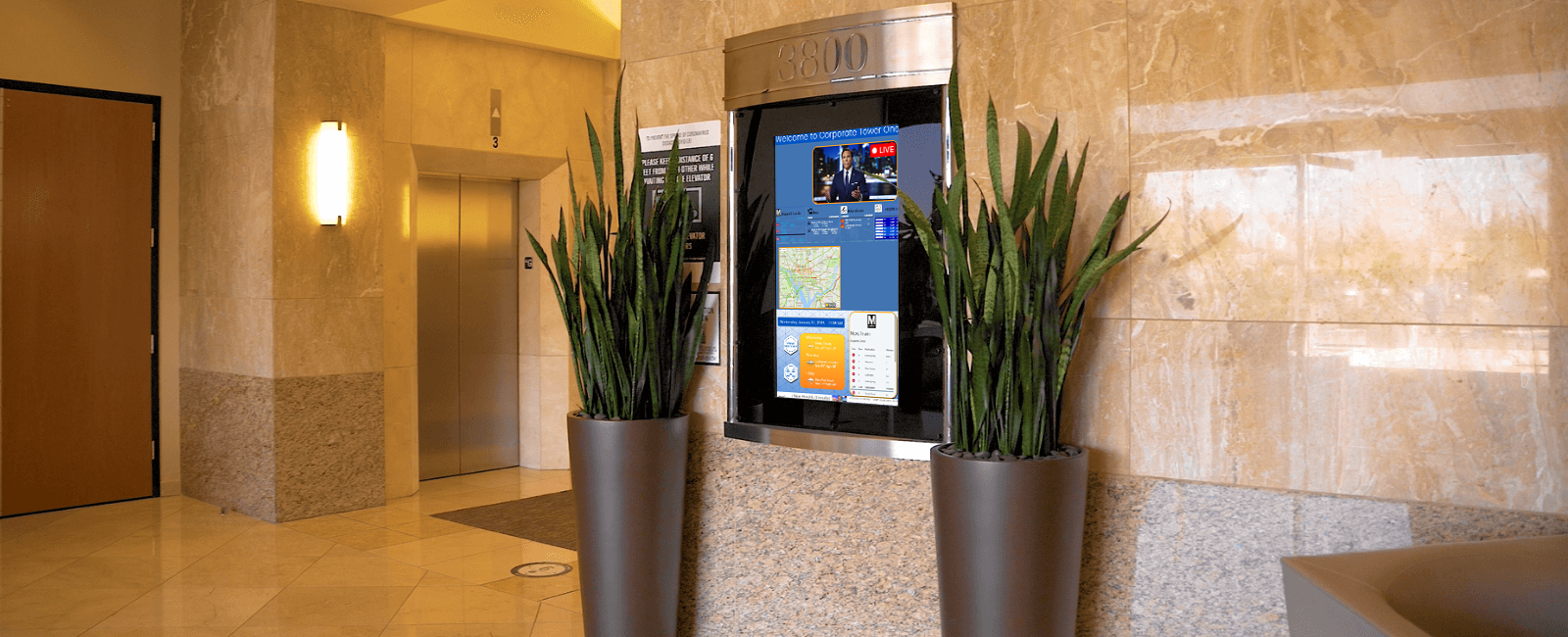
In any repositioning, there is a moment of truth — the point at which a prospective resident, a future retail tenant, or a visiting family member decides whether this building has genuinely become what it claims to be. That moment happens in the lobby. A lobby that still feels like a commercial office environment — with dated tenant directories listing former law firms, a front desk designed for daytime business hours, and wayfinding that assumes everyone already knows where they are going — sends a signal that the conversion is cosmetic. A lobby that welcomes residents by name, guides guests intuitively, surfaces building amenities and services on demand, and operates with the same intelligence as the residential properties competing for the same renter sends a very different signal. Digital building directories and visitor management systems powered by Navigo® are among the fastest, most visible, and most operationally impactful upgrades a conversion property can make. Unlike structural improvements that take months and significant capital, a modern digital directory and lobby technology system can be designed, installed, and operational in a timeline that aligns with a building's leasing launch — putting the right first impression in place before the first resident moves in.
What Residential Conversion Buildings Actually Need From Their Lobby TechnologyThe requirements of a converted residential building are meaningfully different from either a purpose-built apartment tower or a commercial office property. Understanding that distinction is what separates a lobby technology implementation that performs from one that simply occupies wall space. A directory that reflects residential identity, not commercial legacy. The former tenant list is gone. The new directory needs to surface building management, amenities, common areas, and service contacts in a format that feels native to residential living — not repurposed from a commercial floor directory. Wayfinding designed for people who are new to the building. Office tenants learn a building over time. Residents do too, but guests, delivery personnel, and service providers arrive continuously, often for the first time, and need immediate, intuitive guidance. Interactive wayfinding maps that show package room locations, amenity floors, parking access, and unit-level navigation reduce the operational burden on building staff and create a more confident experience for every visitor. Visitor management built for residential check-in workflows. When a resident's guest arrives, the check-in process should be simple, dignified, and fast. Navigo®-powered visitor management systems allow guests to announce their arrival, notify the resident automatically, and receive access guidance — without requiring a staffed front desk to manage every interaction. For buildings operating with lean management teams, this capability is operationally significant. Real-time content management across the building. Building amenities, management contacts, local service information, and community announcements change frequently in a residential environment. Cloud-based platforms like Navigo® allow property managers to update every screen in the building from a single interface, in real time, without requiring on-site technical support for routine content changes. A branded experience that reflects the property's repositioned identity. Conversion properties are, by definition, launching a new brand identity in an existing physical space. Digital lobby technology is one of the most prominent canvases for expressing that identity — the screens residents and visitors interact with every day. Custom-designed directory interfaces that align with the building's aesthetic, color language, and naming conventions reinforce the sense that this is a thoughtfully developed property, not a commercial building with new carpets.
Philadelphia's Conversion Wave Is a Market-Wide OpportunityThe scale of what Philadelphia is doing with its office stock is not a trend that will plateau quickly. With 46% of future adaptive reuse activity concentrated in office-to-residential conversions, and with new projects entering the pipeline consistently, the city is building a new class of urban residential properties that will define its downtown population for the next generation. For developers and property managers working within that pipeline, the competitive question is not whether to invest in lobby infrastructure — it is when and with whom. The buildings that open with complete, thoughtfully designed resident and visitor experiences will set the standard. The buildings that treat lobby technology as an afterthought will spend years trying to catch up to the properties that got it right on day one. Interactive Touchscreen Solutions, Inc. has worked alongside some of the most respected property owners and managers in the country — including CBRE, Jones Lang LaSalle, BioMed Realty, and CapRidge Partners — to deliver lobby technology implementations that match the ambition of the developments they serve. Our Navigo® platform is purpose-built for the complexity of mixed-use, residential, and conversion properties, and our team brings the implementation experience to ensure that your building's lobby experience is ready when your first resident arrives.
Philadelphia Is Writing a New Chapter. Make Sure Your Lobby Reflects It.If you are managing an office-to-residential conversion, planning a mixed-use repositioning, or developing new residential properties in the Philadelphia region or anywhere across the US and Canada, we would welcome the opportunity to show you what Navigo® can do for your building. Every conversion tells a new story. Make sure yours starts the moment someone walks through the door.
Interactive Touchscreen Solutions, Inc. | Powered by Navigo® 📞 800-652-4830 🌐 www.itouchinc.com/contact-us
FAQsWhy is Philadelphia leading the country in office-to-residential conversions right now? Philadelphia's combination of factors makes it uniquely positioned for conversion activity — a significant inventory of older office buildings with floor plates well-suited to residential conversion, strong downtown residential demand, supportive municipal policy, and a development community that has embraced adaptive reuse as a core strategy. Between February 2025 and February 2026, the city's conversion pipeline grew 119%, expanding from 1,200 to 2,697 active units — the highest growth rate among all top 20 metro regions in the country. Conversion projects now represent 46% of all future adaptive reuse activity across the Philadelphia metro, a concentration that reflects both the scale of opportunity and the momentum already built. What makes the lobby experience in a converted building different from a purpose-built residential property? A purpose-built residential building is designed from the ground up with residents, guests, and building staff in mind — the lobby, the directory, the wayfinding, and the visitor management workflow are all conceived for that population. A converted office building carries the operational DNA of its previous life. The directory reflects former commercial tenants. The front desk is configured for business-hours staffing. The wayfinding assumes visitors already know the building. Updating that infrastructure — replacing it with a residential-first lobby technology experience — is one of the most impactful and visible investments a conversion property can make in its repositioned identity. How quickly can a Navigo®-powered lobby system be implemented in a conversion property? Unlike structural renovations that require extended construction timelines, digital building directory and visitor management systems can be designed, manufactured, installed, and operational in a timeline that aligns with a building's leasing launch. ITS, Inc. works with developers and property managers throughout the planning and construction phase to ensure that lobby technology is ready when the first resident arrives — not retrofitted after opening when the experience gap has already been noticed. What specific lobby technology does a residential conversion building need? The core components for a converted residential building typically include a digital building directory configured for residential identity and amenity wayfinding, interactive touchscreen maps that guide residents, guests, and service providers to the right destination within the building, a visitor management system that allows guests to check in and notify residents without requiring a staffed front desk, elevator screen content that reinforces building identity and communicates community information, and a cloud-based content management platform that allows property managers to update all screens in real time from a single interface. Navigo® integrates all of these capabilities into one unified platform. How does visitor management work in a residential conversion building? When a resident's guest arrives at the building, a Navigo®-powered visitor management system allows them to announce their arrival at a lobby touchscreen, which automatically notifies the resident via their preferred contact method. The guest receives confirmation and, where applicable, access guidance to the correct elevator bank or floor. The entire interaction is logged, giving property managers a complete record of building access activity. For buildings operating with lean management teams — common in conversion properties that were previously staffed for commercial office tenants — this capability significantly reduces front-desk dependency while elevating the arrival experience. Can the directory system reflect the building's new brand identity after conversion? Absolutely. One of the most powerful aspects of a Navigo® powered digital directory implementation is the ability to design the interface from the ground up to reflect the property's repositioned identity. Custom color palettes, typography, building naming conventions, photography, and amenity presentation can all be incorporated into the directory design — ensuring that every interaction a resident or visitor has with the building's lobby technology reinforces the sense that this is a thoughtfully developed, fully realized residential property. Does ITS, Inc. work with buildings that are still under conversion, or only completed properties? ITS, Inc. partners with developers and property managers at every stage — from properties still in active conversion through to fully stabilized buildings looking to upgrade their existing lobby technology. The most effective implementations begin during the planning and construction phase, when lobby technology can be integrated into the overall design intent of the space. However, Navigo® systems are also designed for retrofit installation in occupied and operational buildings, with minimal disruption to residents and building staff during the transition.
Contact us today to learn more about Navigo® for your property. |
7150 Columbia Gateway Drive, Suite L, Columbia, MD 21046
112 West 34th Street, 18th floor, Room 18025 New York, NY 10001
Proud Member

7150 Columbia Gateway Drive, Suite L
Columbia, MD 21046
112 West 34th Street, 18-025
New York, NY 10001
