

Headquarters
7150 Columbia Gateway Drive, Suite L, Columbia, MD 21046
New York Location
112 West 34th Street, 18th floor, Room 18025 New York, NY 10001
Proud Member

Elevating the Roast: Why Portland's Coffee and Craft Beverage Scene is Upgrading to Self-Service Kiosks3 minute read | Updated June 19, 2026
Portland has always done things differently. In a city where the third-wave coffee movement didn't just take root — it flourished into a global export — and where craft breweries outnumber chain restaurants by a comfortable margin, the standard for what a beverage experience should feel like is exceptionally high. Portlanders don't just want a great cup of coffee or a well-pulled pint. They want to understand it. They want to know the farm, the roast date, the hop profile, the fermentation process. They want the story behind the sip. That culture of depth and discernment is one of Portland's great competitive strengths. It's also, in the context of today's labor market and peak-hour demand, one of its most pressing operational challenges. The city's independent coffee shops, craft breweries, kombucha taprooms, and specialty beverage venues are navigating a complex moment. Consumer expectations have never been higher. Foot traffic — particularly in neighborhoods like the Pearl District, Mississippi Avenue, and Division Street — is strong and growing. But the staffing environment that once allowed small operators to deliver highly personalized, conversation-rich service at scale has fundamentally shifted. Self-service kiosk technology is emerging as the answer Portland's beverage scene didn't know it was waiting for — not as a replacement for the human touch that defines these spaces, but as an amplifier of it.
The Labor Reality Facing Portland's Independent OperatorsTo understand why self-service technology is gaining traction in Portland's craft beverage scene, it helps to understand the operational context these businesses are operating within. The food and beverage industry nationally is still navigating the aftereffects of significant workforce disruption. According to the National Restaurant Association's 2023 State of the Restaurant Industry Report, 62% of restaurant and café operators identified staffing as their top operational challenge — a figure that has remained elevated for three consecutive years.¹ In Portland specifically, where the cost of living has risen sharply and competition for service industry talent is intense, independent operators are finding it increasingly difficult to maintain the staffing levels required to deliver consistent, high-quality service during peak hours without significant wage pressure on already thin margins. The peak-hour problem is particularly acute for coffee and craft beverage venues. A specialty coffee shop might do 40% of its daily volume in a 90-minute morning window. A craft brewery taproom on a Friday evening might seat 150 covers in the first hour of service. In both scenarios, the bottleneck isn't product quality — it's throughput. The ability to take, confirm, and fulfill orders fast enough to serve every customer who walks through the door before frustration sets in. This is where self-service kiosk technology creates immediate, measurable value — and where Portland's most forward-thinking operators are beginning to invest.
What Self-Service Kiosks Actually Look Like in a Craft Beverage ContextIt's worth being specific here, because the mental image many people carry of a "self-service kiosk" — the utilitarian touchscreen bolted to a fast-food counter — bears almost no resemblance to what modern interactive touch screen solutions look like when thoughtfully deployed in a premium craft beverage environment. Today's kiosk systems feature high-resolution displays with vivid color rendering that can showcase product photography, pour videos, and tasting content in a way that genuinely enhances the product experience. They support fully customized ordering flows — allowing a customer to dial in their cortado to their exact milk preference and temperature, or navigate a brewery's 24-tap selection by flavor profile, ABV, or style, with the same depth of guidance they might get from a knowledgeable bartender. Critically, these systems are designed to be brand-native. The interface, the typography, the imagery, the tone of voice — all of it can be configured to feel like a seamless extension of the venue's identity rather than a generic technology overlay. For a Portland coffee roaster that has spent years building a distinctive aesthetic and brand voice, this matters enormously. The kiosk isn't a concession to efficiency. It's another touchpoint through which the brand communicates its values.
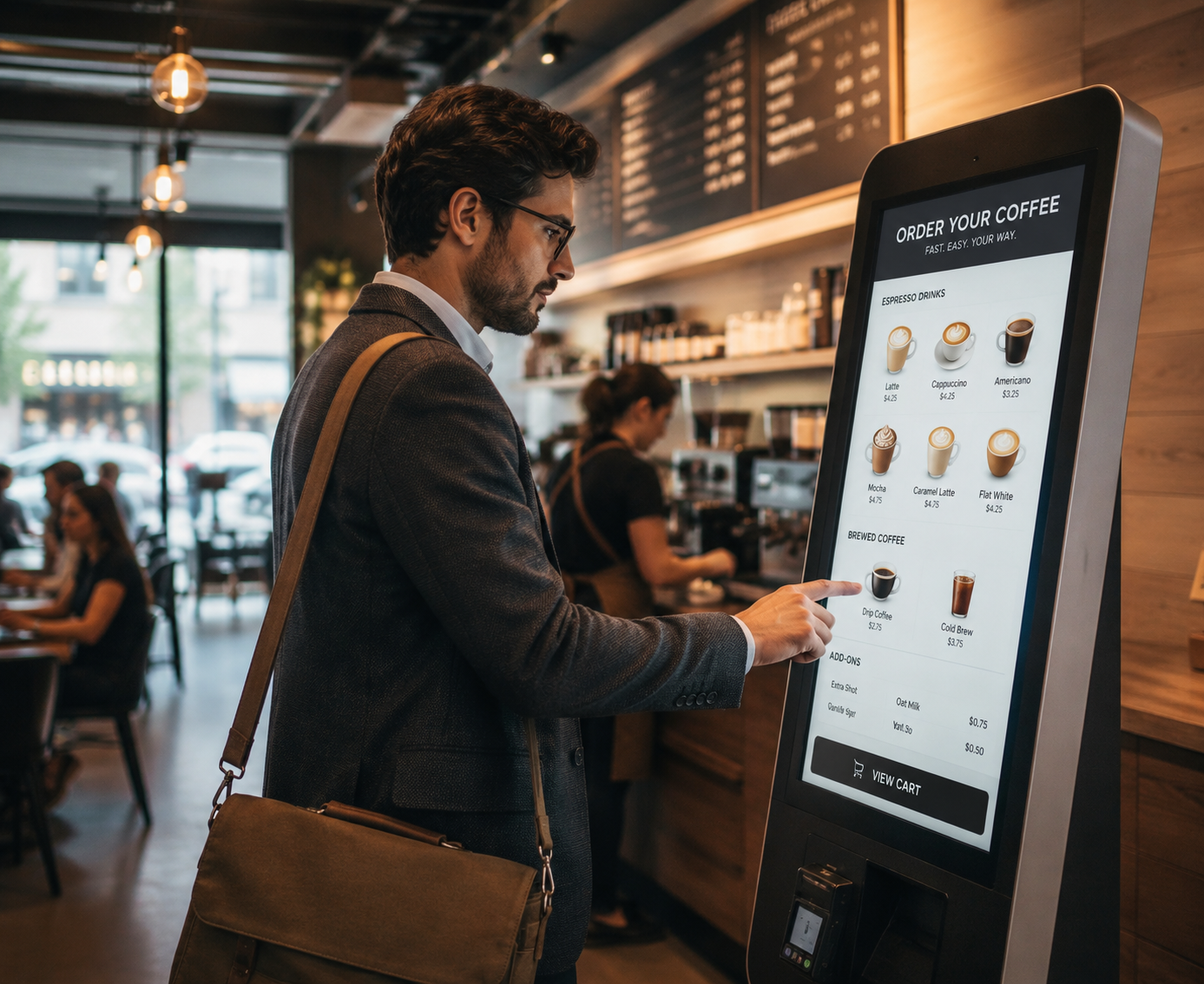
The Tasting Note Guide: Technology as a Storytelling ToolPerhaps the most compelling application of self-service kiosk technology for Portland's craft beverage community is the automated tasting note guide — a feature that transforms the ordering interface into an educational and experiential journey through the product. For single-origin coffee programs, a tasting guide kiosk can present the full provenance of each offering: the farm or cooperative of origin, the altitude and growing conditions, the processing method, the roast profile, the flavor notes the roaster has identified, and suggested brewing parameters. A customer who might otherwise have defaulted to "a medium roast, please" is suddenly equipped to make an informed, personalized choice — and to feel genuinely connected to the product they're ordering. For craft breweries and taprooms, the opportunity is even richer. A well-designed kiosk interface can guide a customer through a tap list with the depth of a certified cicerone: style descriptions, hop and malt profiles, bitterness and sweetness ratings, food pairing suggestions, and the story of why a particular seasonal release was conceived. For customers who are newer to craft beer, this removes the intimidation factor that often leads to defaulting to the most familiar option on the menu. For enthusiasts, it delivers the depth they're actively seeking. This is technology functioning as a storytelling tool — not replacing the expertise of a skilled barista or bartender, but making that expertise available to every customer, at every moment, regardless of how busy the floor is. A 2022 report from Technomic found that 68% of consumers say menu transparency — including ingredient sourcing and preparation details — positively influences their purchase decision.² For Portland's craft beverage operators, who have built their entire brand identity around transparency and craft, that statistic isn't a surprise. It's a validation of what they've always believed — and an opportunity to deliver that transparency at a scale that manual service alone cannot sustain.
Speed Without Sacrifice: How Kiosks Preserve the Local VibeThe concern most commonly raised by independent operators considering self-service technology is a legitimate one: will it make us feel less personal? Less human? Less Portland? It's a fair question, and the answer depends almost entirely on how the technology is implemented. The operators who see the strongest results — in both customer satisfaction and operational efficiency — are those who deploy self-service kiosks as a complement to human service, not a substitute for it. The kiosk handles the transactional elements of the interaction: taking the order, processing payment, confirming customizations, sending the ticket to the bar. This frees the barista or taproom staff to do what they do best: craft the product, engage in genuine conversation, make recommendations, and create the kind of warm, knowledgeable interaction that defines the Portland hospitality experience. Think of it as a reallocation of human attention. Instead of spending 45 seconds per customer on the mechanics of order-taking — repeating menu items, confirming spelling for the cup, processing the card — a barista can spend that time on the craft and the connection. The customer gets a faster, more accurate order and a more present, engaged human interaction. The operator gets higher throughput without compromising the experience. Qu's 2023 Quick Service Restaurant Technology Report found that venues deploying self-service kiosk technology saw an average reduction of 30–40% in average order time during peak periods, alongside a 15–20% increase in average order value driven by on-screen upsell and customization prompts.³ For a coffee shop averaging 200 covers on a busy Saturday morning, a 35% reduction in order time doesn't just reduce the queue. It meaningfully increases the number of customers the venue can serve — without adding a single staff member.
Average Order Value and the Upsell OpportunityOne of the quietly powerful benefits of self-service kiosk technology in beverage environments is its effect on average order value — and the mechanism behind that effect is worth understanding. When a customer orders at a counter with a line behind them, the social pressure of the queue creates a strong incentive to keep the interaction brief. Customers often default to a familiar order rather than exploring options, skip add-ons they might genuinely want, and decline upsell suggestions from staff because it feels like it's holding up the line. At a kiosk, that dynamic disappears. The customer is in control of the pace. They can browse the full menu at their own speed, read tasting notes without feeling rushed, consider the upgrade from a single to a double shot, add a pastry to their order, or explore a seasonal special they wouldn't have noticed on a chalkboard menu. The interface can surface intelligent, contextual suggestions — "customers who ordered this roast also loved our house-made oat milk" — without any awkwardness. Tillster's 2023 Kiosk & Digital Ordering Report found that customers ordering via kiosk spend an average of 20–30% more per transaction than those ordering at a traditional counter.⁴ For a craft brewery taproom where the average ticket might be $18–22, a 25% lift translates to meaningful incremental revenue — compounded across hundreds of covers per week.
Craft Beverage Meets CRE: What Developers and Property Managers Should KnowPortland's craft beverage scene isn't just a cultural phenomenon — it's a significant driver of foot traffic, dwell time, and destination appeal in the city's most vibrant retail and mixed-use corridors. Pearl District coffee shops, Mississippi Avenue breweries, and Division Street taprooms are anchor tenants in every meaningful sense of the word. They create the energy that draws other tenants, visitors, and residents to a district. For CRE developers and property managers activating ground-floor retail space in Portland's high-demand corridors, understanding what premium craft beverage tenants need — and what technology infrastructure supports their operations — is increasingly important to tenant attraction and retention. Self-service kiosk technology requires thoughtful integration into the physical environment: power access, network connectivity, spatial planning that accommodates both kiosk placement and the flow of customer traffic. Properties that are equipped to support this infrastructure — and developers who understand its role in enabling the kind of high-volume, experience-forward tenants that drive property value — are better positioned to attract and retain the craft beverage operators who are defining Portland's retail identity. The CBRE 2023 U.S. Retail Outlook noted that food and beverage tenants — particularly independent, experience-driven operators — are among the most sought-after for mixed-use retail activations in urban markets, and that technology-enabled service models are increasingly a criterion in lease negotiations.⁵ For Portland-area developers, that's a signal worth taking seriously.
Implementation Considerations for Portland OperatorsFor coffee shops, breweries, and craft beverage venues considering a move to interactive self-service technology, a few principles consistently distinguish successful deployments from underwhelming ones. Start with the customer journey, not the technology. The most effective kiosk deployments begin with a clear-eyed look at where friction currently exists in the guest experience. Where are lines forming? Where are staff being pulled away from the bar to answer the same questions repeatedly? Where is the current ordering process creating confusion or limiting exploration? The answers to those questions define where technology creates the most value. Design for the brand, not the category. A kiosk that looks and feels like generic fast-food self-service is a missed opportunity in a craft beverage context. The interface design, product photography, copy tone, and interaction flow should all be configured to reflect the specific identity of the venue — whether that's the warm, tactile aesthetic of a single-origin roaster or the bold, irreverent personality of an East Portland taproom. Train staff to embrace it. The most successful self-service deployments treat the technology as a team tool, not a threat. Staff who understand how the kiosk works — and who actively guide first-time users toward it during peak hours — are a critical part of the system. A well-staffed, well-trained team working alongside kiosk technology consistently outperforms either alone. Measure what matters. Modern kiosk platforms generate rich data on customer behavior — what items are being browsed, where customers are dropping off in the ordering flow, which upsell prompts are converting and which aren't. Operators who use this data to continuously refine their menu presentation, tasting note content, and promotional offers see compounding returns over time.
Portland Is Ready to Lead — AgainPortland has always been ahead of the curve on craft culture. It was among the first American cities to embrace the third-wave coffee movement, among the first to build a truly thriving independent brewery ecosystem, and consistently among the first to adopt the operational and creative innovations that define what independent food and beverage can be at its best. Self-service kiosk technology — thoughtfully designed, brand-native, and deployed in service of the guest experience rather than at its expense — is the next chapter in that story. It's the tool that allows Portland's most beloved coffee shops, breweries, and beverage venues to grow without compromise: serving more customers, telling richer product stories, and freeing their people to do the work that no technology can replicate. The roast doesn't change. The craft doesn't diminish. What changes is the operator's ability to share it — at scale, with speed, and without losing a single note of what makes Portland's beverage culture worth experiencing.
Ready to Upgrade Your Guest Experience?ITS, Inc. partners with independent operators, hospitality venues, and CRE developers across the country to design and deploy interactive touch screen solutions that perform. Whether you're a Pearl District roaster looking to eliminate the morning queue or a Mississippi Avenue taproom ready to tell a richer product story, we're here to help you build the experience your guests deserve.
Sources
Frequently Asked QuestionsWill self-service kiosks make my coffee shop or taproom feel less personal? Not when implemented thoughtfully. The operators seeing the best results use kiosks to handle transactional order-taking, which frees staff to focus on craft, conversation, and genuine hospitality. Customers often report feeling more engaged — not less — because the staff they interact with are more present and less task-burdened. The key is positioning the kiosk as a complement to your team, not a replacement for it. How customizable are self-service kiosk interfaces for an independent brand? Highly customizable. Modern interactive kiosk platforms support full brand configuration — including custom color palettes, typography, photography, tone of voice, and interaction flow. For an independent Portland roaster or brewery with a distinctive visual identity, the kiosk interface can be designed to feel like a natural extension of the brand rather than a generic technology overlay. What kind of product information can be displayed through a tasting guide kiosk? Essentially anything you'd want a knowledgeable staff member to communicate. For coffee, this can include origin details, farm or cooperative information, processing method, roast profile, tasting notes, and brewing parameters. For craft beer, it can include style descriptions, hop and malt profiles, bitterness and sweetness scales, ABV, food pairing suggestions, and the story behind the brew. The content is entirely configurable and can be updated in real time as your menu evolves. How do self-service kiosks affect wait times during peak hours? The impact on peak-hour throughput is one of the most consistently documented benefits of kiosk technology. Research from Qu's 2023 QSR Technology Report found an average reduction of 30–40% in order processing time during peak periods for venues deploying self-service kiosks. For a busy Saturday morning coffee rush or a Friday evening taproom crowd, that kind of throughput improvement is the difference between a line that converts and a line that walks away. Is self-service kiosk technology financially accessible for independent operators? Yes — and the ROI case is increasingly well-documented. Modern kiosk deployment models include scalable options that allow independent operators to start with a single unit at the highest-traffic touchpoint and expand from there. When the throughput gains, average order value lift, and labor efficiency improvements are modeled together, most operators see a payback period well under 18 months. ITS, Inc. works with clients to build a deployment plan that fits both the operational need and the financial reality. How does ITS, Inc. support craft beverage operators through the process? ITS, Inc. brings a full-service partnership approach to every engagement — from initial discovery and customer journey mapping through interface design, hardware specification, software integration, installation, and ongoing support. We understand that every venue is different, and we design solutions that reflect the specific identity, operational model, and growth goals of each client. Our experience across retail, hospitality, healthcare, and commercial real estate means we bring a broad perspective to every project — and a deep commitment to outcomes that go beyond the technology itself.
Contact us today to learn more about Navigo® for your property.  |
7150 Columbia Gateway Drive, Suite L, Columbia, MD 21046
112 West 34th Street, 18th floor, Room 18025 New York, NY 10001
Proud Member

7150 Columbia Gateway Drive, Suite L
Columbia, MD 21046
112 West 34th Street, 18-025
New York, NY 10001
